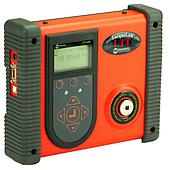
When should underground pipe and cable locators replace metal detectors?
Underground pipe and cable locators utilize an active principle: a transmitter injects a specific frequency signal 82,175 kHz into the target pipe or cable, and a receiver picks up the electromagnetic signal to trace the location. This method allows operators to determine the direction and depth (0–5 meters) of the utility, as well as detect water leaks-tasks that a conventional metal detector cannot perform.
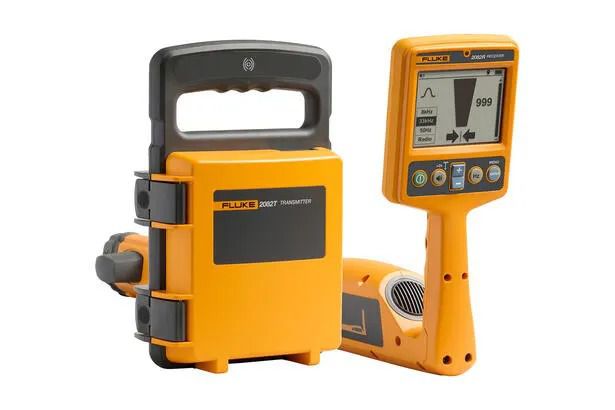
Utility locators can also detect non-metallic (plastic) pipes through auxiliary sensors, whereas metal detectors only work with conductive metals. In utility mapping and recovering lost engineering blueprints, these locators speed up construction and prevent accidental power cable strikes or water main ruptures. A prime example is the FLUKE-2082 - a core underground pipe and cable locator kit engineered in the USA. It integrates three tracing methods: direct connection, induction, and external coupling. The transmitter boasts a 1W output power, a frequency of 82.175 kHz ±0.02%, and is powered by six LR20 "D" batteries (providing 50 hours of operation in direct connection mode). This device delivers highly accurate locating for buried metallic cables and pipes with excellent noise filtering.
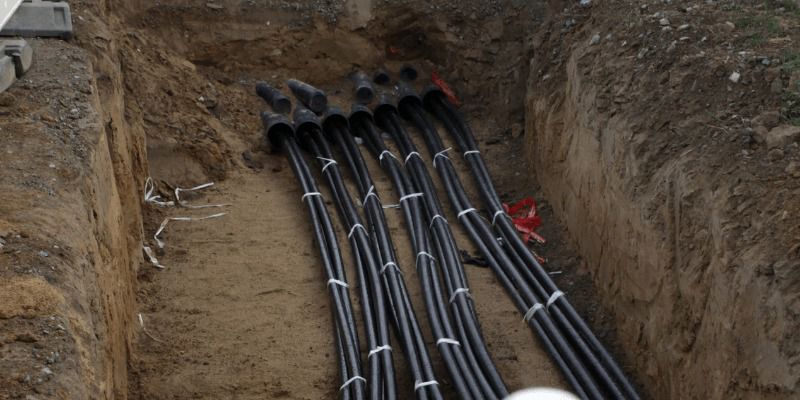
What are the best budget-friendly and high-performance options for underground pipe and metal cable locators?
The FLUKE-2082 is a professional-grade solution for civil engineering and utility management. The TX transmitter offers three operational modes: direct connection (cable clipping), induction (no excavation required), and external coupling (optional). The RX receiver displays depth, direction, and current strength, complemented by an adjustable volume speaker. This system can pinpoint cable breaks, short circuits, and insulation faults - faults that a standard metal detector would completely miss.
The BOSCH D-tect 200 C is a versatile wall scanner/detector capable of locating metals, live wires, and water pipes inside walls and shallow ground. It uses electromagnetic sensors to scan wall surfaces, detecting 40mm pipes at depths of up to 120mm. The device features an LCD screen with a bar graph display, audible alerts, and is powered by a 9V battery. It is perfectly suited for construction contractors and home renovations without requiring an active transmitter like the FLUKE system.
The TAKACHIHO MPL Element is a high-precision locator from Japan, specialized in tracing buried metallic pipes, power cables, and fiber optic cables. The TX transmitter operates at 82.175 kHz ±0.02%, with a 1W output power, powered by six LR20 "D" batteries (50-hour runtime). The RX receiver displays utility depth from 0 - 5 meters and the current value in milliamperes (mA). It is powered by four LR6 "AA" batteries (30-hour runtime with a 30-minute auto-power-off function). Rated at IP54, the TX weighs 2.6kg, RX 1.1kg. This equipment provides superior noise filtering, precise cable alignment, and cable fault/break detection.
Read more:
Are metal detectors under 10 million VND really sufficient?
The application of digital signal processing (DSP) technology and multi-layer sensors in modern conveyor belt metal detector systems.
What should be considered when choosing a utility locator?
When selecting an underground pipe and cable locator, you must evaluate the output frequency, depth display capability, and operational modes. A frequency of 82,175 kHz is highly common for power cables as it avoids low-frequency interference. A depth range of 0 - 5 meters is sufficient for residential and commercial construction, but heavy industrial applications may demand greater depths.
The direct connection mode (clipping onto the cable) yields the most accurate results but requires access to the cable end. Induction and external coupling modes are preferred when excavation is not feasible. An IP54 protection rating against dust and water ingress is critical for harsh outdoor environments.
Additionally, always check the device's noise filtering capabilities and its ability to display current values (mA), which helps identify and distinguish between different utility types (e.g., power vs. telecommunication cables). A receiver equipped with an adjustable volume speaker and a backlit LCD screen ensures seamless operation during night shifts.
While the FLUKE-2082 offers three versatile connection methods suitable for projects ranging from small water pipes to large power grids, the BOSCH D-tect 200 C is lightweight and portable for rapid home renovations. Meanwhile, the TAKACHIHO MPL Element stands out for its capability to locate fiber optic (non-metallic) lines.