
Electromagnetic balance principle and detector frame architecture of conveyor belt metal detectors
The core of the system lies in the coil structure, which is set in a balanced state to create a uniform magnetic field that covers the entire detection chamber. As the product passes through, any changes in magnetic properties or conductivity cause distortion of the magnetic field, thereby generating a very small voltage signal that is transmitted to the central processing unit.
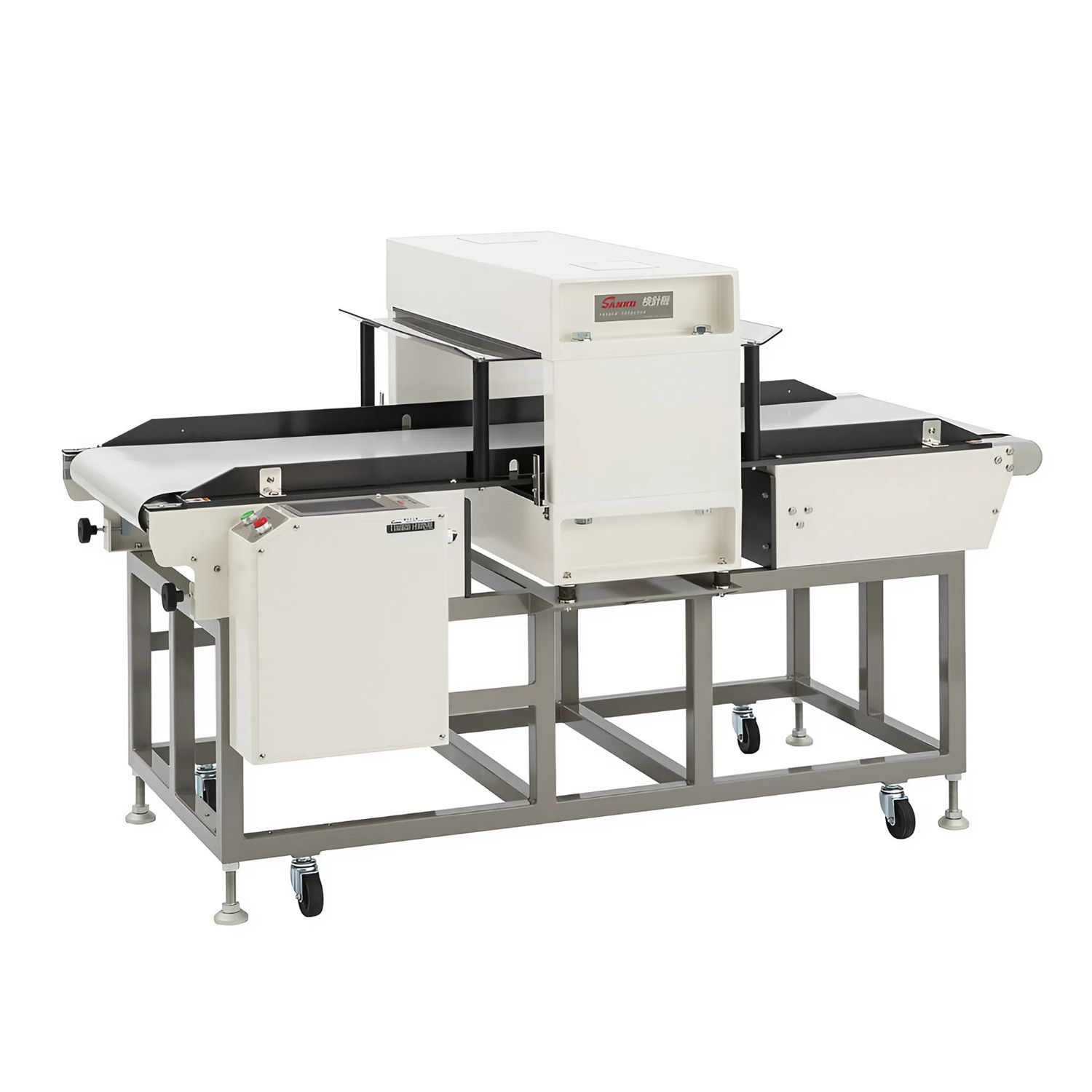
Modern machines employ a multi-frequency simultaneous architecture, allowing for automatic adjustment of the scanning range to suit different materials, from dry products to high-humidity environments. The machine frame is typically constructed from demagnetizing materials to minimize the impact of high-power motors or nearby mechanical vibrations, helping to maintain a stable signal baseline throughout continuous operation.
Phase parameter calibration procedure and actual sensitivity configuration
For the system to operate effectively, technicians need to perform a product learning process to establish the characteristic electromagnetic phase angle for each product code. With machines like the Sanko SC1-600, operators can fine-tune the sensitivity to detect 1.0mm iron particles and 2.5mm stainless steel at a conveyor speed of 25m/min.
After the cutoff threshold is set, the processor automatically eliminates background noise and only triggers an alert when the amplitude exceeds the set limit. Operational data is stored digitally, allowing for the recording of hundreds of thousands of records for traceability and analysis of fault trends in the industrial supply chain.
Intelligent control panel and data reporting capabilities.
The control interface is designed to be intuitive, using a touchscreen similar to a smartphone, allowing operators to easily monitor the system status. Signal graphs are displayed in real time; a sudden increase in amplitude indicates that a foreign object has been detected.
The system allows for password protection and access restrictions on critical parameters to prevent incorrect operation and sensitivity errors. Furthermore, operational data can be transmitted to an office computer via network connection, supporting remote line monitoring and daily inspection history storage.
Predictive maintenance strategy and routine hardware fault handling.
Maintaining stable operation requires periodic inspections using pre-sized test samples before each production shift. Technicians need to monitor the mechanical wear of the conveyor belt, as deep scratches easily accumulate metal dust and generate false interference. The built-in diagnostic algorithm will issue warnings when there is a decrease in magnetic field strength or a malfunction in the switching power supply. Regular replacement of roller bearings and cleaning of circuit boards with dry compressed air helps extend system lifespan and maintain stable detection capabilities in complex metal contamination scenarios.
Grounding techniques and solutions for handling electromagnetic interference (EMI).
Operational efficiency largely depends on the installation method and the ability to handle electromagnetic interference from the factory environment. A crucial requirement is establishing an independent grounding system for high-power units to eliminate eddy currents that cause false alarms. In addition, mechanical balancing of the conveyor belt is essential to ensure smooth operation of the rollers and belts, minimizing vibration and static electricity affecting the detector frame.
Maintenance work goes beyond surface cleaning and includes checking the shielding of signal cables and recalibrating measurement points using standard test samples periodically or after each change in the manufacturing process.