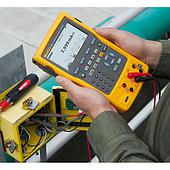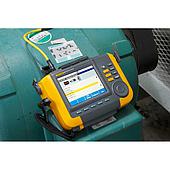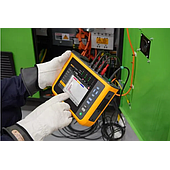
The terms RMS and True RMS are certainly not unfamiliar to those who regularly use multimeters. But do you know why RMS and True RMS are so popular?
What is RMS and True RMS and why is it important?
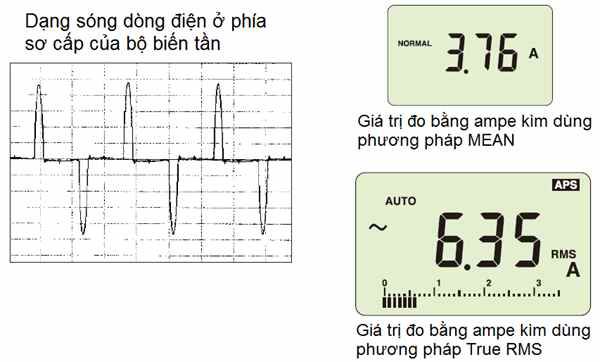
RMS is an electrical measurement that reflects the effective value of an alternating current (AC) signal. For example, an AC signal with an RMS value of 10V has the same heating effect as a DC current of 10V.
However, a typical RMS measurement is only accurate when you measure signals that have an ideal, undistorted sinusoidal waveform. When using a general-purpose multimeter with only basic RMS functionality to measure electronic loads, inverter motors, or modern electrical equipment, the results can be significantly off.
That's why we have True RMS, a more advanced measurement method. In reality, electronic devices such as inverters, LEDs, and computers all produce non-standard, distorted, or pulsed electrical waves. At this point, only a True RMS multimeter can accurately measure current and voltage values, helping you to better check, maintain, and ensure electrical safety. If you only use a regular RMS meter, you may get incorrect parameters, leading to incorrect assessment of the system's condition.
How True RMS Works
Technically, True RMS works in the following way:
- The input electrical signal is sampled continuously over a period of time via an analog-to-digital converter (ADC).
- Each sample value is squared (to ensure all values are positive).
- The squared values are averaged.
- The average result is squared, resulting in the correct value.
This process allows accurate measurements even with complex waveforms such as distorted waves, square waves, pulse waves, voltage noise or harmonics that a typical RMS meter cannot handle.
Refer to related content: Understand RMS and True RMS measurements to choose the right device for your needs
Why are RMS and True RMS preferred in measuring instruments?
- High accuracy: Basic RMS gives accurate results with standard sine waves, while True RMS gives accurate results in most complex waveforms.
- Suitable for many waveforms: In modern electrical engineering, electronic devices often produce distorted waves, pulse waves, and noise waves. True RMS still measures correctly, which is necessary for repair and maintenance.
- Save time and money: Using a True RMS multimeter helps avoid errors, reduces re-checking work, and limits the risk of equipment damage due to inaccurate measurements.
- Meets technical standards: Many international measurement standards require the use of True RMS to ensure reliable results.