Welding machine power is the electrical power a welder needs to create and maintain an arc. It should be assessed alongside welding current, available supply voltage, efficiency, power factor, and duty cycle—not by amperage alone.
For light-duty work on a 220V supply, a 1-phase machine is commonly the practical choice. For continuous work or heavier fabrication where 380V is available, a 3-phase machine generally offers a higher power range and more stable operation under load.
Summary: Input power is not the same as output power. Common 1-phase welders range from about 3 to 8 kW, while industrial 3-phase MIG machines are commonly listed around 8 to 15 kW. Match the machine to the available electrical supply and the intended workload.
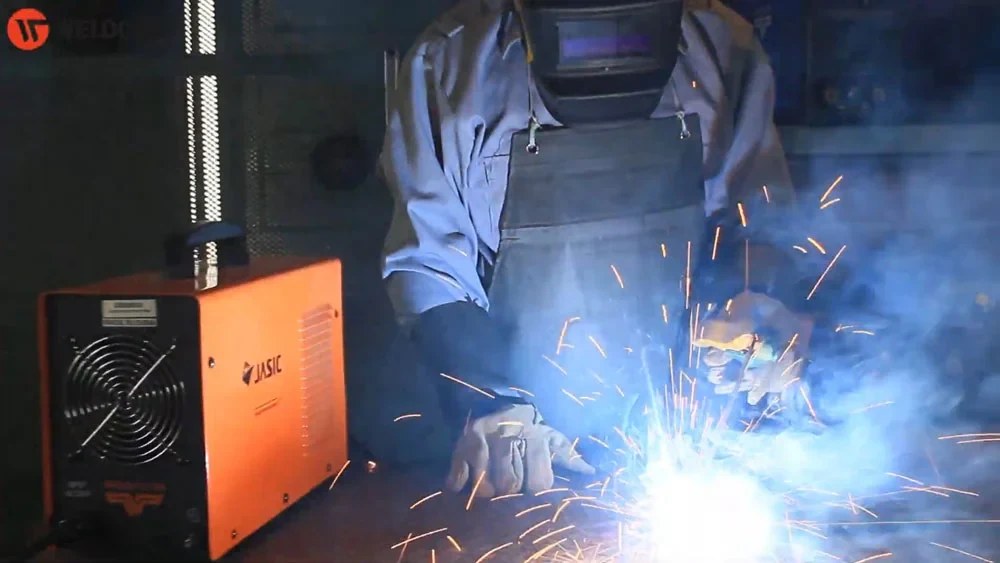
What does welding machine power mean?
Welding machine power refers to the electrical energy required for welding operation. Product specifications may distinguish between input power, drawn from a 220V or 380V supply, and output power, which is converted into welding current and welding voltage.
Two machines with the same 200A current rating may not consume the same amount of electricity. Their input demand can differ because of inverter efficiency, power factor, and electrical design.
How is welding machine power calculated?
For an approximate input-power calculation, use P = U × I × cosφ, where P is power, U is supply voltage, I is input current, and cosφ is the power factor.
For an electronic welder, input power can also be estimated by dividing output power by efficiency. For example, an output of 4 kW at 85% efficiency corresponds to approximately 4.7 kW of input power.
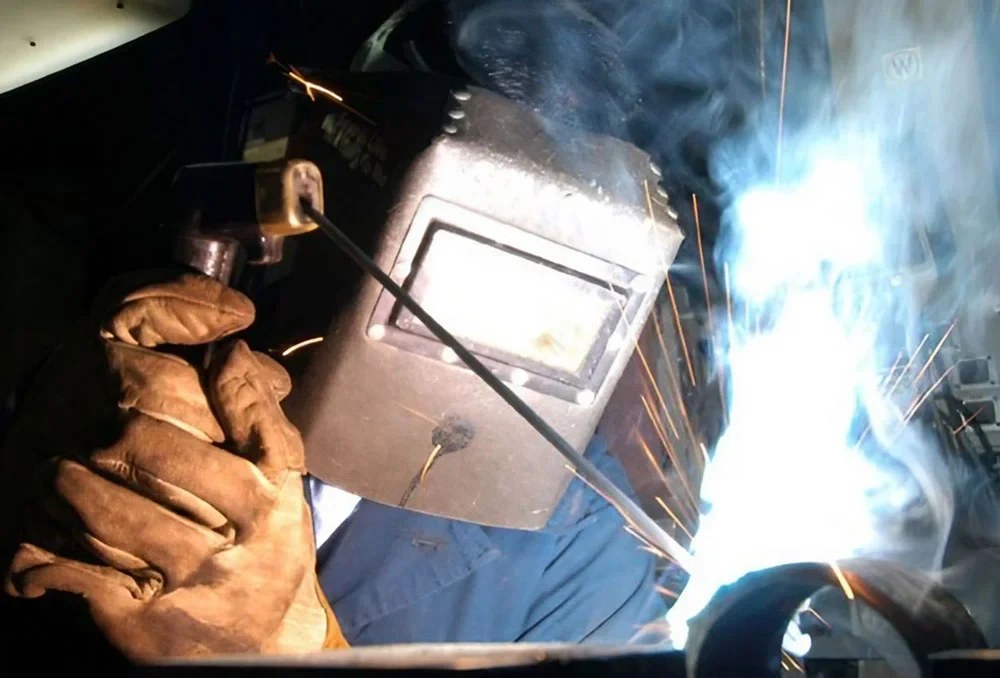
How many kW does a 1-phase welding machine typically use?
A 1-phase welding machine is generally used with a 220V supply for household repairs, small projects, and light mechanical work. Typical reference ranges are about 3 to 4.5 kW for 120A–160A machines, 4.5 to 6.5 kW for 180A–200A machines, and 6 to 8 kW for 220A–250A machines.
This type is suitable where portability and access to a standard 220V supply matter. It may be less suitable for prolonged continuous welding or thicker materials.
When is a 3-phase welding machine the better choice?
A 3-phase welding machine is better suited to workshops, steel fabrication, heavy mechanical work, industrial MIG welding, or multi-shift production. The reference power range for these applications is commonly 8 to 15 kW, with larger machines potentially requiring more.
With a 380V supply available, 3-phase equipment is intended to operate more steadily at higher loads and during longer working periods.
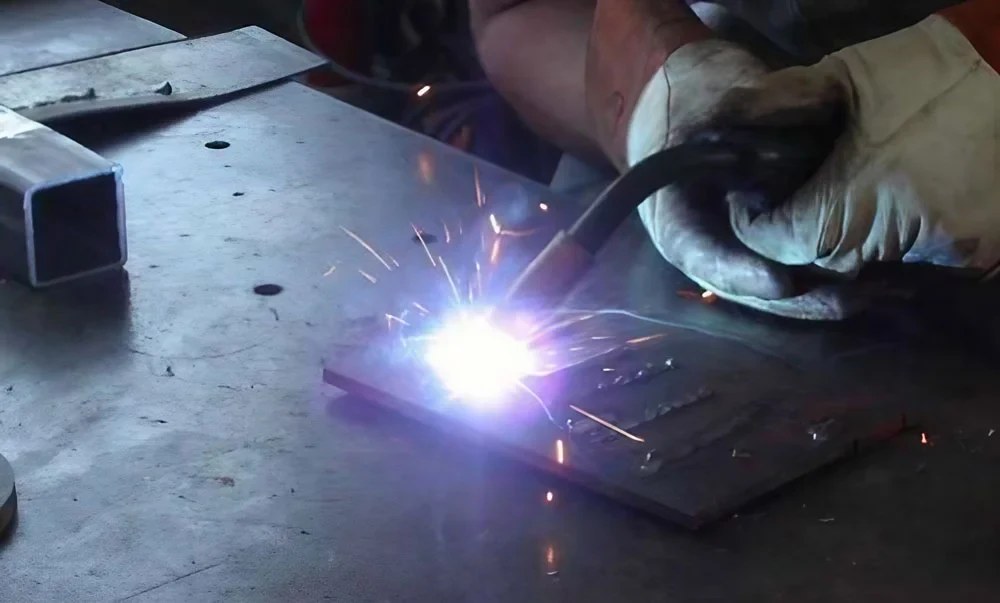
How do power ranges differ for stick, MIG, and TIG welders?
Power requirements vary by welding process, current range, supply type, and usage conditions. Stick welding references list approximately 3–4.5 kW at 160A, 4.5–6.5 kW at 200A, and 6–8 kW at 250A.
For comparison, a 180A–200A mini MIG welder is listed at about 5–7 kW, while a 250A–350A industrial MIG welder is listed at 8–15 kW. TIG welders in the 200A–300A range are listed at about 4–10 kW depending on whether they use 1-phase or 3-phase power.
| Welder type | Typical current range | Supply | Reference power range |
|---|---|---|---|
| Mini stick welder | 120A–160A | 1-phase 220V | 3–4.5 kW |
| General stick welder | 180A–200A | 1-phase 220V | 4.5–6.5 kW |
| High-power stick welder | 220A–250A | 1-phase / 3-phase | 6–8 kW |
| Mini MIG welder | 180A–200A | 1-phase 220V | 5–7 kW |
| Industrial MIG welder | 250A–350A | 3-phase 380V | 8–15 kW |
| TIG welder | 200A–300A | 1-phase / 3-phase | 4–10 kW |
How should you choose welding machine power for the job?
Choose power according to material thickness, expected welding frequency, and the electrical supply at the worksite. Basic household repair work, gates, railings, and small steel components can commonly be covered by a machine in the 3 to 5.5 kW range.
For a mechanical workshop, a 1-phase machine around 5.5–8 kW may be considered for stronger general work. Continuous welding or thicker materials may call for 3-phase capacity from 8 kW upward, provided a suitable 380V supply is available.
What mistakes should be avoided when selecting welder power?
The main mistake is choosing only by the maximum amp rating without checking the actual power supply. A machine with higher power demand than the available electrical system can experience voltage drop, unstable arc starting, and unstable operation.
Choosing a welding machine that is too small can also force it to work beyond its intended capacity, increasing heat and potentially shortening service life. Check power, current, duty cycle, and supply type together.
How can welding electricity use be reduced?
Set welding current to suit the material instead of always using the highest setting. Avoid leaving the machine idling for long periods, use adequately sized power cable, and limit unnecessarily long cable runs.
Regular maintenance also supports efficient operation: keep the machine free of dust, ensure cooling works properly, and maintain stable contact at welding cables and the work clamp.