Detecting hot spots on power lines and electrical equipment
Thermal imaging cameras allow for the rapid identification of areas of abnormal heat on electrical lines and equipment. This is a common application when inspecting electrical systems. Thermal imaging clearly shows locations with elevated temperatures at switches, circuit breakers, relays, junction boxes, or terminals. These phenomena often stem from overloads causing current to exceed permissible limits, loose connections increasing resistance, or oxidized or dirty contact surfaces causing localized overheating. Early identification of these points helps reduce the risk of short circuits, fires, and explosions, and limits equipment damage.
Check the condition of the motor and electric engine
Motors and electric motors play a crucial role in production lines, therefore operating temperatures need to be maintained at a stable level. Thermal imaging cameras assist in quickly checking for abnormalities such as worn bearings causing excessive friction, motors operating beyond their designed capacity, or winding faults leading to localized overheating. Early detection of these signs helps extend equipment lifespan, limit sudden breakdowns, and avoid production interruptions
Evaluating the performance of transformers
Transformers are considered a central component of the electrical system, so their temperature needs to be monitored regularly. Thermal imaging cameras provide a visual representation of heat distribution during operation. Engineers can monitor core and winding temperatures to identify signs of overload or internal faults, and inspect bushings and heat sinks for looseness, degradation, or damage. Thermal imaging allows for early detection of overload risks or insulation oil leaks, thereby reducing the likelihood of serious incidents.
Check the capacitors and battery
Capacitors and batteries are common in industrial power systems and backup power supplies. When malfunctions occur, these devices often generate higher-than-normal heat. Thermal imaging cameras help quickly identify overloaded, short-circuited, or overloaded capacitors. Additionally, faulty battery cells in a series can easily cause localized overheating. By using thermal imaging, power storage systems maintain a more stable and safer state.
Inspect circuit boards and electronic devices
In the electronics manufacturing industry, thermal cameras are invaluable tools for quality assessment and troubleshooting. When components like chips, resistors, or capacitors malfunction, they often generate more heat than normal. Thermal cameras help pinpoint areas of abnormally high temperatures on the circuit board and observe heat distribution to assess the design's heat dissipation capabilities. This inspection method shortens repair time and helps maintain product quality.
Several models of thermal cameras are suitable for electrical maintenance
Choosing the right thermal imaging camera enhances inspection efficiency and reduces risks when working with electrical systems. The Fluke TiS20+ thermal camera boasts a 120x90 pixel resolution and a thermal sensitivity below 60 mK, supporting clear identification of abnormal heat sources. IR Fusion technology combines thermal and real-world images to quickly pinpoint fault locations. Its robust design and simple interface make it suitable for engineers working in the field.
The Testo 868 thermal camera features a 160x120 pixel resolution, providing clear images for observing small hot spots on electrical equipment. Wi-Fi connectivity with the Testo Thermography app supports data transmission, image analysis, and report generation directly on your phone or tablet.
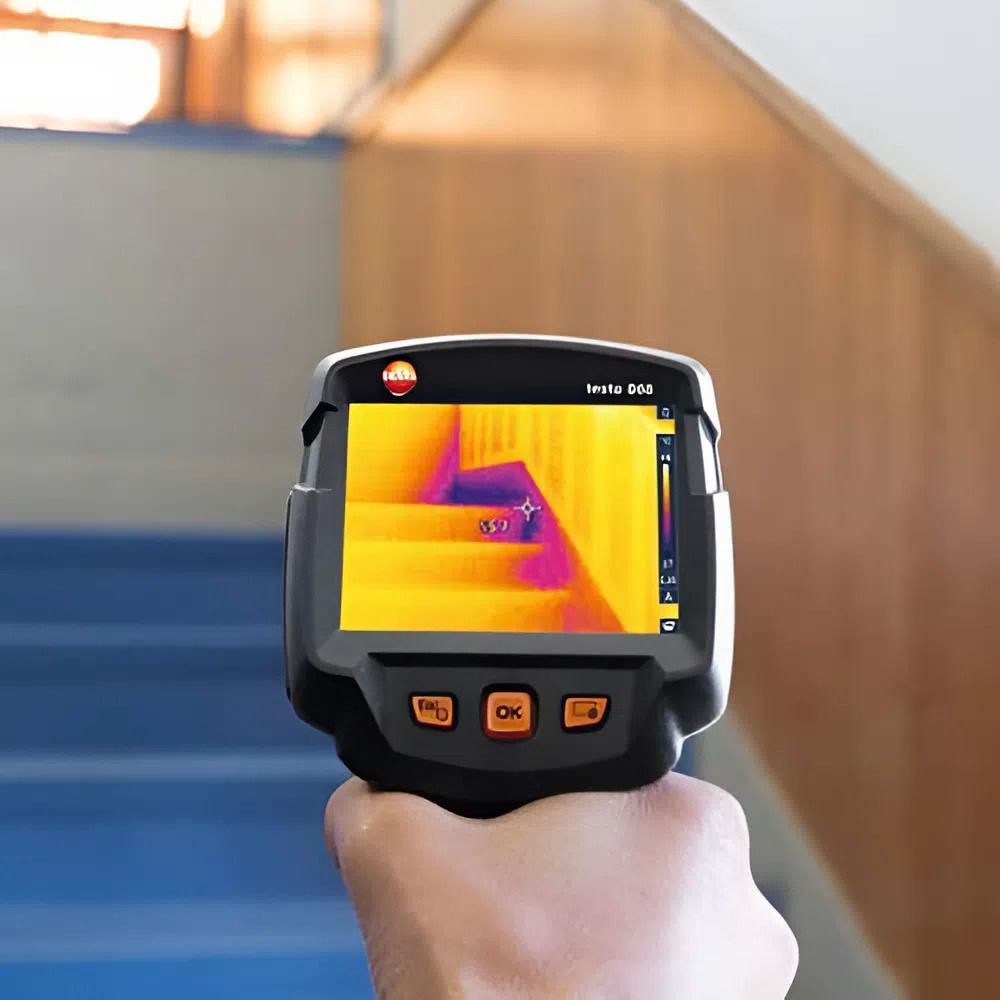
Overall, thermal imaging cameras offer many practical benefits for electrical system inspection and maintenance. From motors and transformers to underground cables, this technology helps identify abnormalities early, limit failures, and reduce repair costs. Thermal cameras from Fluke, Testo, and Flir are currently distributed by EMIN, meeting a wide range of electrical inspection and maintenance needs.