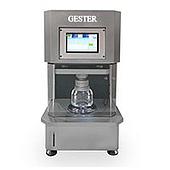
A protective clothing blood penetration resistance tester is used to evaluate how a material used in protective clothing resists penetration by synthetic blood. This type of assessment is relevant when laboratories, manufacturers, and product-development teams need consistent information about the liquid-barrier behavior of protective clothing materials.
Rather than judging a garment only by visual appearance or fabric weight, blood penetration resistance testing examines whether a liquid challenge reaches the inner surface of the tested material. The resulting observations can support material comparison, quality-control decisions, and development work for protective clothing intended for exposure to blood or other body fluids.
What does the tester evaluate?
The main purpose of a synthetic blood penetration tester is to assess resistance to liquid penetration under defined test conditions. A specimen of protective clothing material is placed in the test setup and exposed to a synthetic blood solution. The test then checks whether the solution penetrates through the material and reaches its inner side.
This approach helps distinguish between a material that acts as a liquid barrier during the test and one that allows penetration under the selected conditions. It is important to interpret results in the context of the applicable test method, specimen preparation, and defined exposure conditions. A result from one test configuration should not be treated as a general statement about every possible use condition.
How blood penetration resistance testing works
In the source-described process, synthetic blood is applied to the outer surface of the protective clothing material at a controlled pressure. Controlling the application conditions helps make repeated tests more consistent. After exposure, the tester is used to determine whether synthetic blood has passed through the specimen.
A typical evaluation process includes preparing the material sample, securing it in the testing device, applying the synthetic blood challenge, observing the inner surface, and recording the outcome according to the selected method. Careful handling of samples and consistent test conditions are essential because folds, damage, incorrect placement, or uncontrolled exposure can affect the observation.
Standards referenced for protective clothing testing
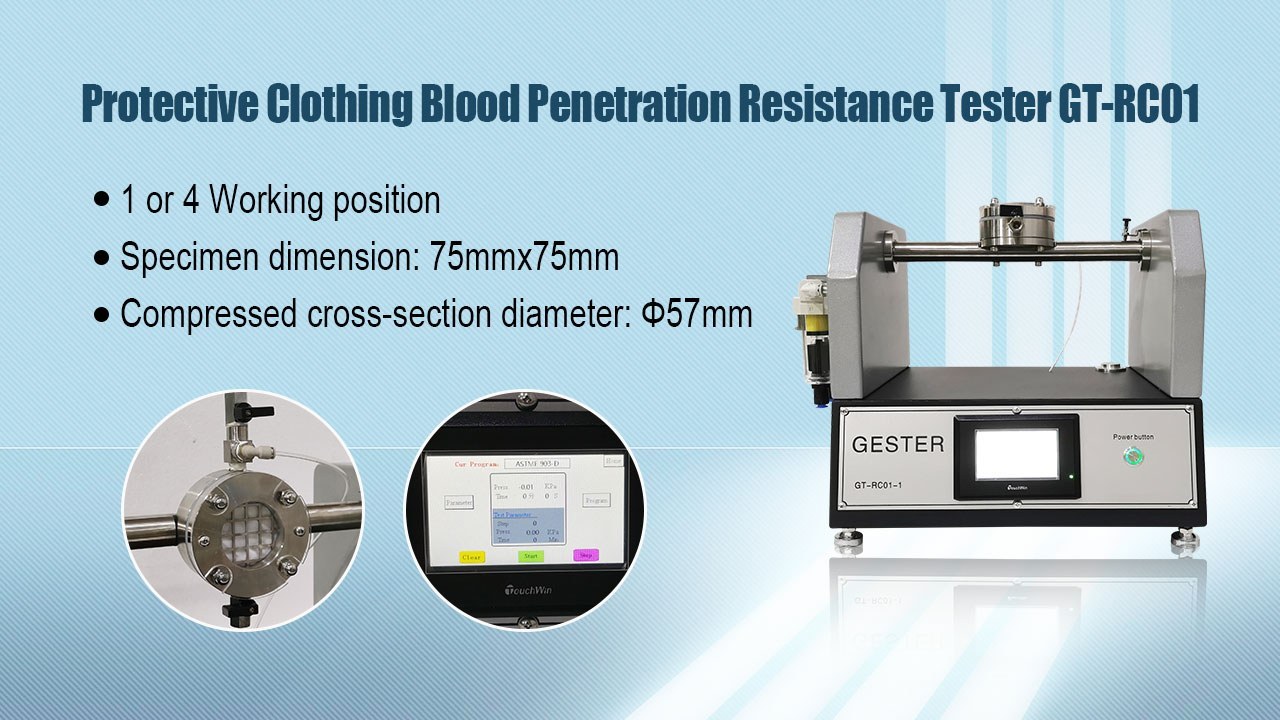
The GT-RC01 Protective Clothing Blood Penetration Resistance Tester is referenced with the following standards: ASTM F903, ASTM F1670, ASTM F1671/F1671M, YY/T0700, GB19082, ISO 16603, ISO 16604, IS 16545, and IS 16546.
ASTM F1670 addresses the resistance of materials used in protective clothing to penetration by synthetic blood. ASTM F1671 addresses resistance to penetration by bloodborne pathogens using a surrogate microbe under conditions of continuous liquid contact. These methods have different scopes, so the applicable requirement should be confirmed before selecting a test procedure or interpreting a result.
Why this test matters in quality control
For protective-clothing manufacturers, a blood penetration resistance test can be part of a structured quality-control program. It provides a repeatable way to examine incoming materials, compare production samples, and identify changes that may affect liquid-barrier performance. Test records can also help teams review consistency across batches when used alongside their internal inspection procedures.
For research and development, the protective clothing blood penetration resistance tester can assist with screening new material constructions and protective-clothing designs. By applying a defined synthetic-blood challenge, teams can compare samples under the same conditions and use the observations to guide further development. The test is therefore useful as a controlled material-performance evaluation, not as a substitute for defining the intended use of the finished garment.
Choosing the right testing approach
Before testing, identify the product type, the required standard, and the performance question that needs to be answered. Confirm whether the objective is synthetic-blood penetration resistance, assessment involving a surrogate microbe, or another liquid-barrier requirement. The selected method should match the specification or regulatory framework applicable to the protective clothing being evaluated.
Used with an appropriate method and controlled procedure, Protective Clothing Blood Tester supports objective evaluation of synthetic-blood barrier performance in protective clothing materials.