Concept of microbiological cabinet?
A microbiological cabine is simply an anti-contamination device for biological samples and materials susceptible to dust. Air is drawn in and filtered through a Hepa filter, creating a clean and sterile environment. Microbiological cabinets protect samples and testing procedures, ensuring they are not contaminated, essential for researchers in the laboratory.
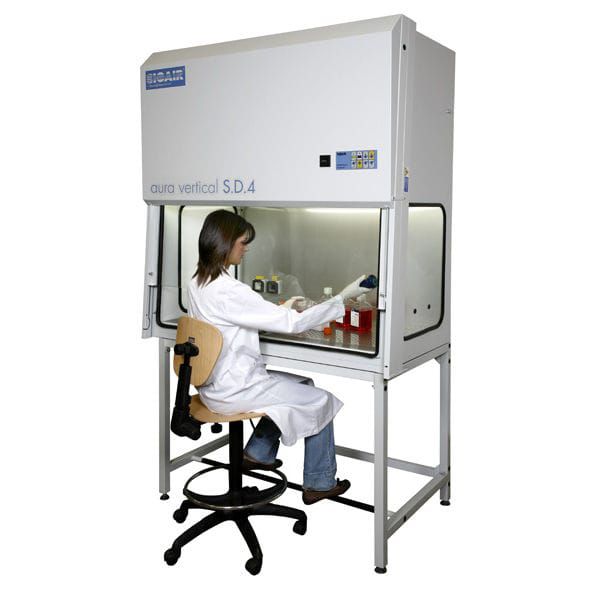
What is the structure of a microbiological cabinet?
The shell of the microbiological cabinet is usually made of thick sheet iron with powder coating or 304 stainless steel.
- Powder-coated iron: The advantage is that the surface is glossy, easy to clean and resistant to chemical corrosion, helping the cabinet have a long life, limiting peeling or rusting.
- Stainless steel 304: This material is also popular because it is durable and easy to clean, no less effective than powder coating.
Working door: Made of glass with handles on both sides, easy to pull up and down when operating, cleaning and UV irradiation.
Controllers, knobs: Switches for lighting, UV lights, and exhaust fans are located in front of the cabinet, convenient for users.
Filter system:
- Coarse filter: Mounted on the top of the cabinet, pre-filters dust and is easy to clean.
- Hepa filter: Filters dust particles as small as 0.3um, filtration efficiency reaches 99.99%, helps clean air and deodorize effectively.
Working chamber: Resistant to chemical corrosion, easy to clean, usually made from powder-coated iron or 304 stainless steel.
Light system:
- UV lamp: Disinfects inside the cabinet, ensuring maximum sterilization environment before operation, usually arranged after HEPA filter.
- Lighting: Fluorescent lights illuminate the working compartment evenly, without causing glare, helping to increase working efficiency.
Incubator stand set: Made from powder-coated iron, with adjustable balance base and wheels for easy movement.
Operating principle of microbiological cabinet
Room air is drawn in from above the incubator through the coarse filter layer, helping to retain large dust particles and prolong the life of the main filter. Next, the air passes through the HEPA filter, removing the smallest dust particles and creating a clean air stream, blowing vertically or horizontally into the working compartment depending on the type of microbiological cabinet. The clean air then moves through the work area and exits from the open front of the cabinet.
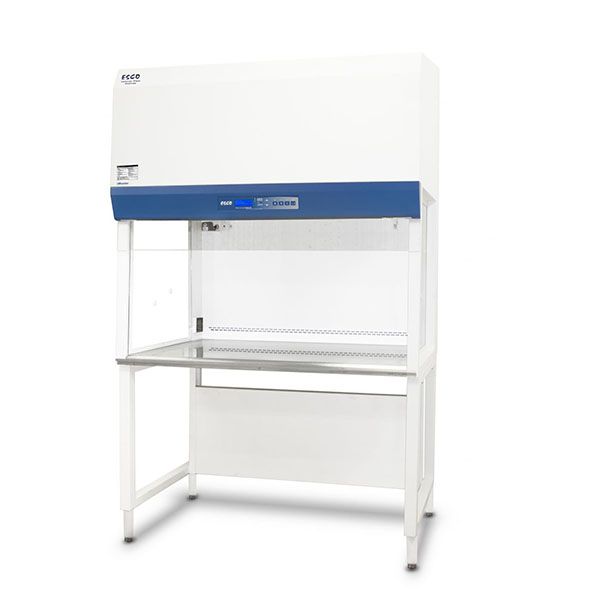
The HEPA filter is capable of filtering dust particles as small as 0.3 micrometers with an efficiency of 99.99%, ensuring the air in the working compartment is clean and unpolluted, creating a standard working environment. The operating principle of a microbiological cabinet is to continuously provide sterile air into the working compartment to maintain sterility and safety.
Classification of microbiological cabinets
Currently, microbiological cabinets have many different designs, styles and sizes, classified based on a number of factors as follows:
Based on the material outside the incubator:
- Stainless steel: Stainless steel is a durable, corrosion-resistant material, guaranteed not to oxidize, helping to protect laboratory samples from contamination. In addition, stainless steel is easy to clean after operations.
- Powder-coated iron: Powder-coated iron has a high gloss finish, is anti-corrosion and easy to clean. This material also ensures durability and does not leak during use.
Based on cabinet size:
- Microbiological cabinets have popular sizes: 900mm, 1200mm, 1500mm, 1700mm. Although the structure of the cabinets is similar, larger cabinets can be equipped with some additional features to ensure better experimental efficiency. Choose the appropriate size depending on the size and structure of the laboratory.
Based on filter design:
- HEPA filter: Traditional HEPA filter provides 99.99% average efficiency for particle sizes from 0.1 to 0.3 microns.
- ULPA filter: ULPA filter provides >99.99% efficiency for particle sizes from 0.1 to 0.3 microns, which is preferred by many customers over HEPA
Based on operating principles:
- Horizontal flow microbiological cabinet: Filtered air flows into the main work area in a one-way horizontal air flow and exits from the front of the cabinet door opening. This type of cabinet has less turbulent air than vertical blower cabinets.
- Vertical blowing microbiological cabinet: Filtered air passes through the main working area, creating a one-way vertical air flow and exits from the front of the cabinet. Vertical blast cabinets are safer because they do not blow air directly toward the person performing the experiment.
Refer to Biological safety cabinets