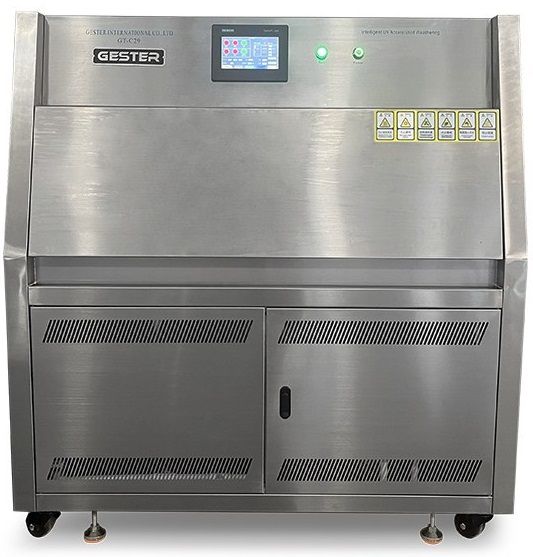
The GT-C29 UV aging tester is designed to evaluate the weather resistance of materials for quality control and research applications. The equipment is designed to simulate outdoor environmental factors, including solar radiation, rain, condensation, and temperature changes through accelerated test cycles. This allows users to observe potential changes in test specimens at an earlier stage of environmental exposure.
The phenomena to be monitored may include fading, discoloration, chalking, cracking, surface hazing, blistering, embrittlement, loss of strength, and oxidation. Test results provide technical teams with additional data for comparing materials, evaluating coatings, or adjusting product development approaches. The interpretation of results should still take into account the test specimen, selected test cycle, and specific evaluation requirements of each organization.
Operating Principle of the GT-C29 UV Aging Tester
According to the product information, the GT-C29 uses UVA-340 fluorescent lamps as its UV radiation source. Inside the test chamber, UV radiation is combined with conditions such as rain, elevated temperature, condensation, and dark periods. These conditions are arranged into automatically repeated cycles rather than requiring the operator to perform each step manually.
The purpose of accelerated testing is to reproduce aging factors and shorten the time required to observe changes in test specimens. According to the available product information, the equipment can reproduce cumulative effects that may normally occur after months or years of outdoor exposure within several days or weeks. This information serves as general guidance for testing; the actual test duration should be selected according to the material evaluation objectives and internal testing procedures.
Key Features of the Equipment
Automatic Environmental Test Cycles
The GT-C29 UV aging tester can alternate between UV exposure, elevated temperature, condensation, rain, and dark conditions through automatic test cycles. This operating method supports continuous testing and allows users to focus on specimen preparation, test monitoring, and result evaluation.
Air Circulation Inside the Test Chamber
The test chamber uses a single-loop air circulation system combined with an axial fan to improve airflow. According to the product description, this configuration helps improve irradiation, heating performance, and temperature uniformity inside the chamber.
Specimen Rack and Mobility
The specimen rack is described as being made of stainless steel and aluminum alloy. The equipment is fitted with PU wheels to facilitate movement and can be secured in position during operation. The drainage system includes a U-shaped settling component to support smooth water discharge.
Protection Functions
The UV aging tester includes leakage current protection for the control circuit, overload and short-circuit alarms, over-temperature alarms, and low-water protection. These functions are intended to monitor operating conditions that require attention during testing.
Applications in Material Quality Control
In the plastics and rubber industries, fabric aging tester can be used to evaluate the aging behavior of plastic components, rubber products, and polymer materials under simulated outdoor environmental conditions. Indicators such as cracking, embrittlement, and color changes can be observed after testing.
For paints, coatings, and printing inks, UV aging testing helps monitor phenomena such as fading, discoloration, and surface peeling. This is useful when comparing the performance of different formulations or finishing materials under the same specified test conditions.
Outdoor construction materials, including cladding panels, sealants, and decorative materials, are also among the potential applications. In addition, the equipment can be used for testing automotive exterior components, outdoor furniture, electronic products, and packaging materials intended for long-term outdoor use.
In laboratories, manufacturing facilities, and material research applications, the GT-C29 can form part of a quality evaluation process. To obtain comparable results, the specimen type, evaluation criteria, and test cycle conditions should be clearly defined before testing.
Lamp Selection and Standard Requirements
The GT-C29 is configured with UVA-340 lamps. Users may choose to upgrade to UVB-313 lamps depending on their testing requirements. Lamp selection should be based on the evaluation objective and the test method applied by the organization.
The GT-C29 meets ASTM G154 requirements and other commonly used UV aging test standards. When the equipment is used for a specific testing application, users should verify the equipment configuration, test cycle conditions, and documentation requirements against the applicable standard.
Frequently Asked Questions
Is the UV aging tester suitable for continuous testing ?
According to the product description, the GT-C29 supports continuous testing through its stainless steel chamber, circulation system, and automatic test cycles. Operators should follow water supply requirements, monitor warning signals, and comply with their organization's operating procedures.
Why is it necessary to prepare a test plan before operating the equipment ?
Defining the test specimens, test conditions, and evaluation criteria in advance helps ensure that the results support the intended quality control objective. It also provides a basis for comparing different material specimens or product batches using the same testing approach.
What types of material damage can the GT-C29 evaluate ?
The fabric durability tester can be used to monitor changes such as fading, discoloration, chalking, cracking, hazing, blistering, embrittlement, loss of strength, and oxidation in test specimens.