Outside the measuring line
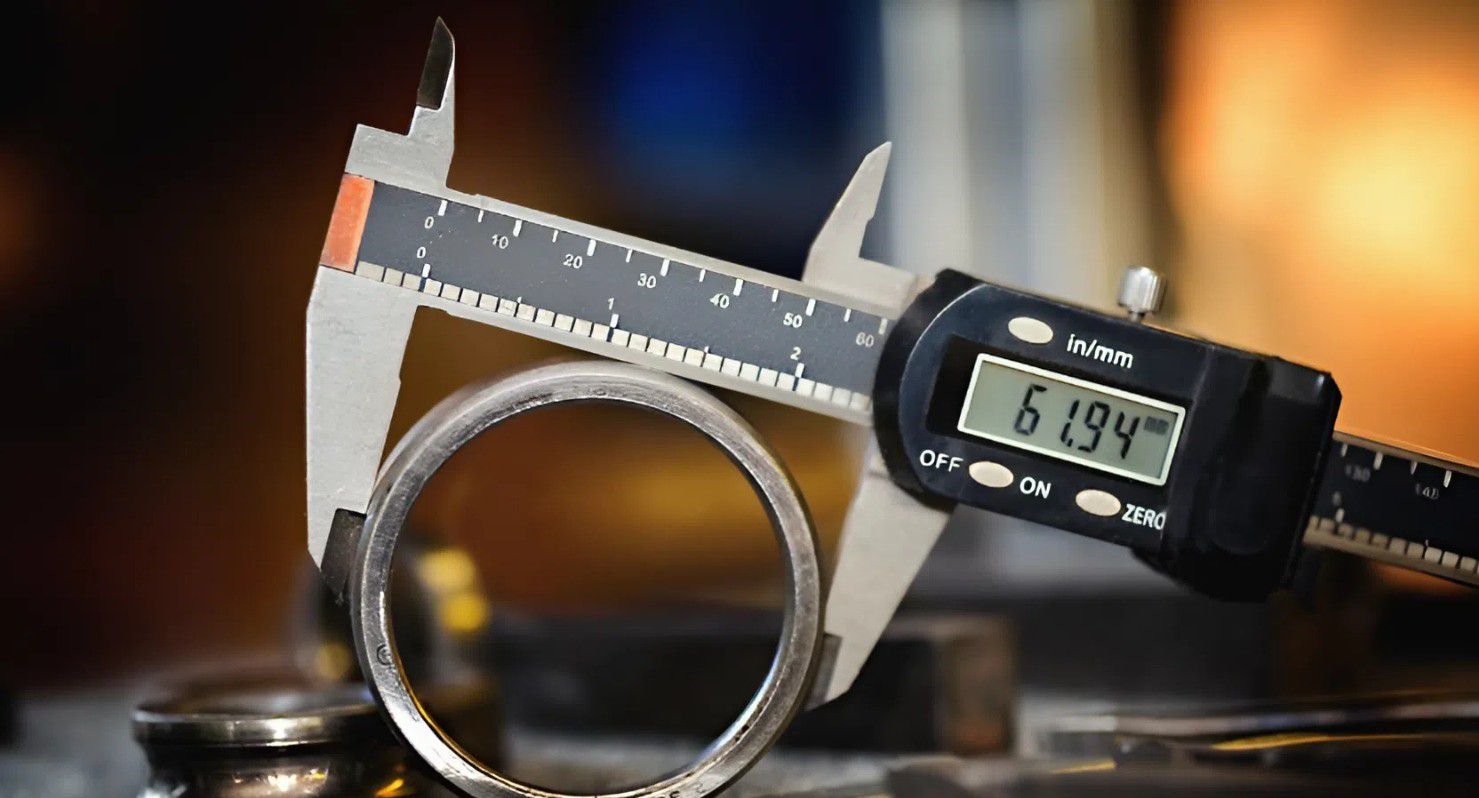
The first measurement method we want to introduce, and this is the most commonly used, is to determine the surface dimensions of a workpiece.
Procedure: Open the lower jaw, place the object to be measured in the center, and close the jaw until it touches the surface. The data will appear immediately on the LCD or be read from the main scale markings.
Note: The ruler must be held perpendicular to the object. Even a small amount of dust or placing the ruler at an angle will result in an inaccurate reading of several millimeters.
How to measure the inner diameter
When measuring the inner diameter of a tube or hollow space, the upper jaw (small jaw) will come in handy.
Procedure: Close the upper jaw and insert it into the hole. Slowly open the jaw until the two edges of the jaw are pressed against the inner wall of the workpiece. Tighten the locking screw to secure it before reading the measurement.
Note: It is recommended to use a caliper with jaws that match the width of the hole. If you frequently measure various sizes of workpieces, consider the difference between 150mm and 200mm calipers. See also: Comparison of 150mm and 200mm calipers: Which is the best-selling one you shouldn't miss? This will help you determine which caliper has a wider jaw range for your daily work.
How to use a depth gauge
Both mechanical and digital calipers have a thin bar at the end of the caliper body to measure the depth of holes or grooves.
Operating: Use your thumb screw to push the long depth bar out, place the end of the caliper perpendicular to the opening of the hole, and push the bar down until it reaches the bottom.
Note: Keep the caliper body parallel to the hole being measured. If the caliper is tilted, the measuring bar will be crooked, resulting in a longer reading than the actual length.
Methods for measuring length and degree
Calipers are also excellent for measuring the length of parts or the distance between uneven planes (step measurement).
Operation: Place the fixed jaw at the starting point, and slide the jaw to the end point of the section to be measured. For step measurement, use the end of the caliper to press against the edge of the workpiece and pull the jaw to determine the distance between two parallel planes.
Digital calipers are truly versatile if you know how to utilize all the parts of the caliper body. Popular models like the Insize 1108-200 or the waterproof models from Mitutoyo are designed to meet these measurement needs well. Hopefully, the above information will help you work more accurately and quickly when handling workpieces in the workshop.