High EC levels cause water loss, hinder absorption, and compact the soil
As EC increases, a pressure difference arises between the soil solution and plant roots, causing water to tend to move outwards. Plants struggle to retain water even when the soil remains moist, leading to reduced growth.
At high salt levels, nutrient absorption is also affected. Certain ions predominate in the soil solution, disrupting the balance and preventing plants from efficiently utilizing essential nutrients.
If this situation persists, soil particles tend to clump together. The soil becomes less porous, water penetration is difficult, root development is restricted, and nutrient access is reduced.
Irrigation and fertilization directly affect EC levels
Monitoring soil conditions at different stages helps identify changes in EC rather than relying solely on external indicators.
For soils prone to salt accumulation, increasing watering at certain times can reduce ion concentrations around the root zone. Conversely, if the soil is prone to leaching, watering should be divided into smaller amounts to maintain soil solution stability.
Fertilizer application should be adjusted according to the existing nutrient status. Instead of applying a large amount at once, it can be divided into several applications to limit sudden increases in EC.
Drainage, organic farming, and crop rotation help limit salt buildup
Poorly drained soils tend to retain more salt, causing EC (Electric Acid Level) to gradually increase over time. Improving aeration reduces the retention of excess ions.
Adding organic matter helps loosen the soil, maintain adequate water retention, and distribute ions more evenly. This leads to a more stable root zone environment with each irrigation and fertilization.
Crop rotation or the use of salt-tolerant plants also helps reduce salt buildup in the soil after several consecutive harvests.
EC levels to monitor during cultivation
Most crops thrive when the EC (Electricity Value) is between 0.5 and 3.0 dS per meter, depending on the crop type.
- Below 0.5 dS per meter, the soil is usually nutrient-deficient.
- Between 0.5 and 1.5 dS per meter is a suitable range for many common crops.
- Between 1.5 and 3.0 dS per meter, plant response needs to be monitored.
- Above 3.0 dS per meter, high salt levels can be detrimental to root growth.
Periodically measure EC using a handheld device
EC measurements are typically performed using specialized equipment, providing quick results and ease of operation. Models like the Hanna HI98331 are popular due to their ability to measure directly in the soil.
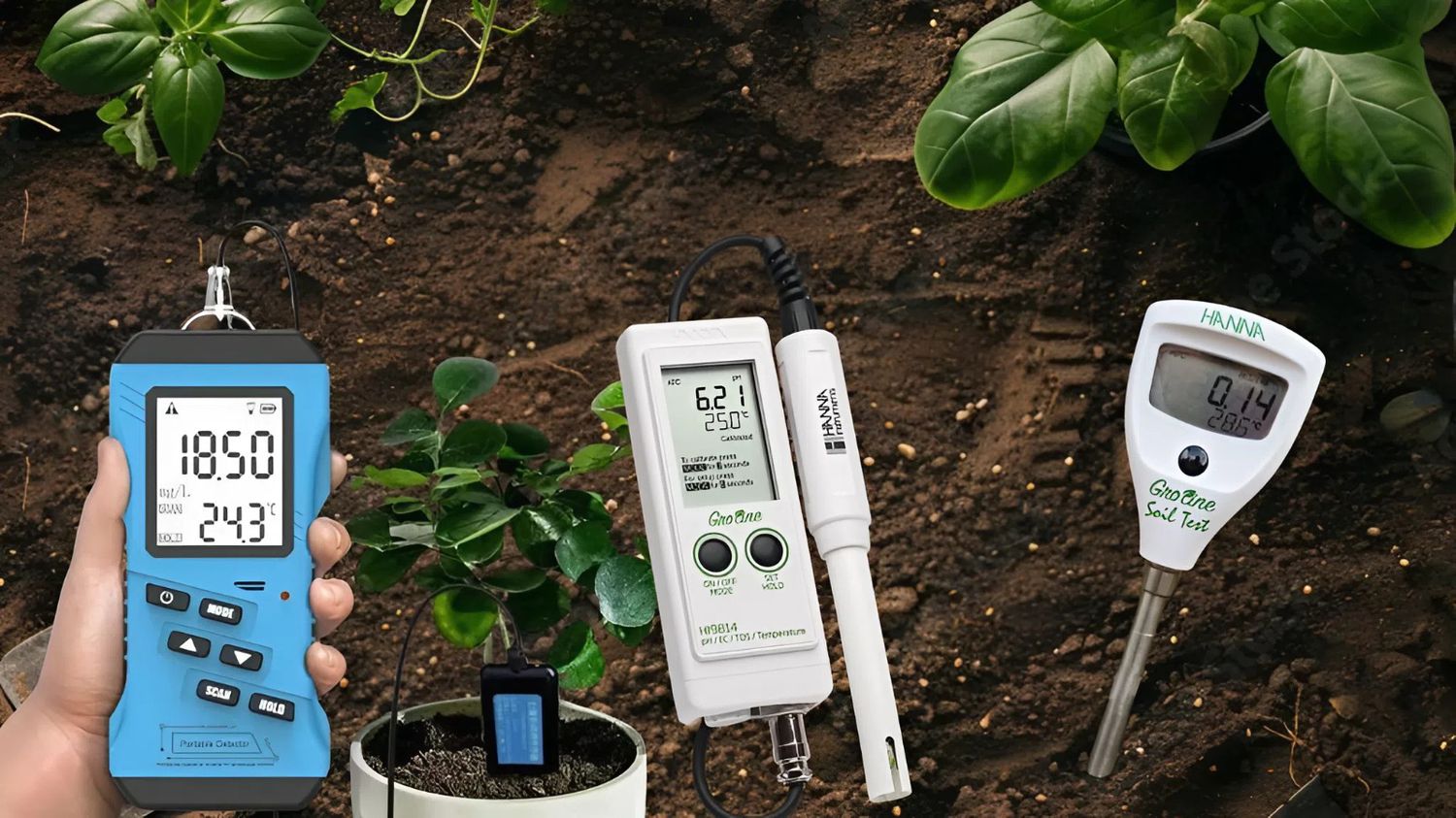
Monitoring periodically helps identify trends in soil changes, allowing for more appropriate adjustments to water and fertilizer levels at each stage.