Thermal imaging for substation maintenance helps locate temperature rise that may occur before an electrical component or piece of equipment fails. Because the measurement is non-contact and can be made at a distance, it supports inspection of energized high-voltage assets without interfering with system operation.
This approach is relevant to transmission lines, transformers, circuit breakers, lightning arresters, and related high-voltage equipment.
Summary: Thermal anomalies can indicate increased electrical resistance before failure. Non-contact inspection supports safer work around high-voltage assets.
Why is thermal imaging used in high-voltage substations and transmission systems?
Thermal imaging is used because several electrical faults can share a visible thermal symptom: a temperature rise caused by increased electrical resistance. Detecting that rise can help identify potential issues before component or equipment failure.
High-voltage maintenance has broad operational importance because transmission lines and the high-voltage side of transformers serve downstream users. Unplanned outages may affect infrastructure such as manufacturing, communications, hospitals, refrigeration, banking, and traffic control, while repair or replacement can be costly.
What electrical conditions can thermal inspection help identify?
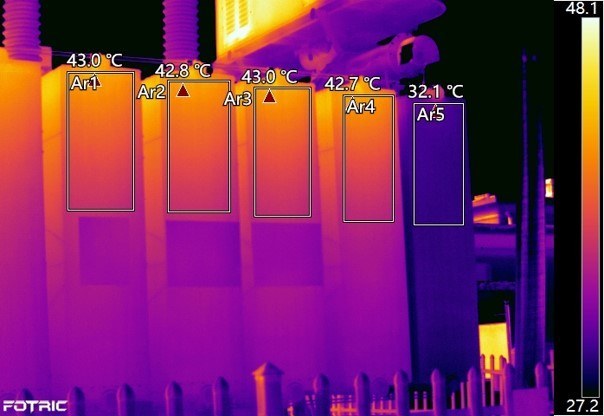
Thermal inspection can help reveal abnormal heating associated with several conditions in high-voltage distribution equipment. Examples given include a poor connection at an insulator bushing, degradation of a metal oxide disk in a lightning arrester, and oil or gas leakage at a transformer or circuit breaker.
A thermal image does not by itself establish the cause of every anomaly. It provides a temperature-based indication that can direct inspectors toward equipment requiring further evaluation.
How does non-contact thermal imaging improve inspection work?
Non-contact thermal imaging allows measurements to be taken from a distance, which supports inspector safety when evaluating high-voltage equipment. It also avoids interrupting the operating system for the thermal inspection itself.
That combination is particularly useful where direct access is hazardous or difficult, including remote transmission-line locations. Inspectors can evaluate thermal conditions while keeping separation from energized or hard-to-reach assets.
How is lens options fit different electrical inspections?
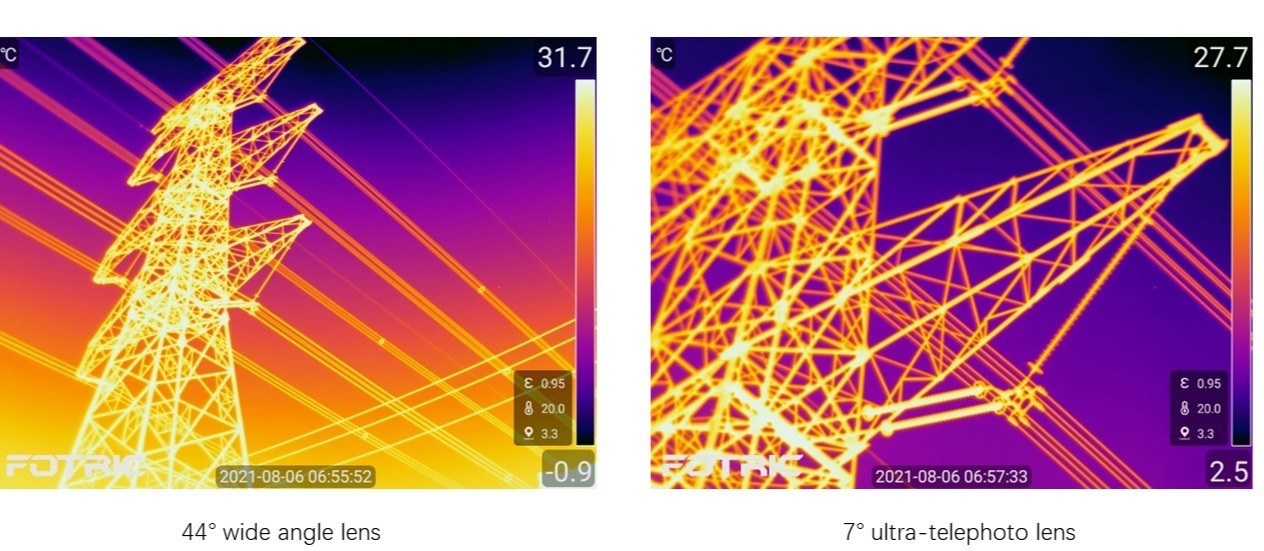
A 44° wide-angle lens is intended for an overall view of equipment status, while telephoto options are intended for remote or dangerous-to-access locations.
| Lens option | Inspection use described |
|---|---|
| 44° wide-angle lens | Broad overview of equipment status |
| 12° telephoto lens | Evaluation of remote thermal defects |
| 7° ultra-telephoto lens | Evaluation of remote thermal defects |
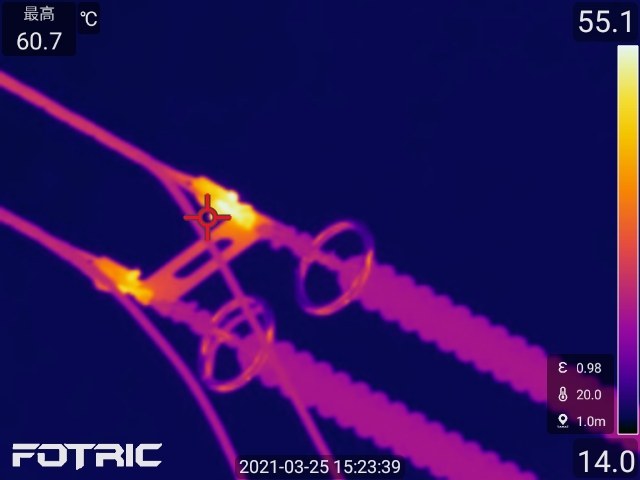
For transmission-line inspections, the source states that the 12° telephoto and 7° ultra-telephoto lenses can evaluate thermal defects as small as 0.05 m and 0.03 m in diameter, respectively, from a distance of 50 m.
When should an inspection team choose a wide-angle or telephoto lens?
Choose the 44° wide-angle lens when the priority is a broad overview of large equipment, such as assessing the general thermal condition of a transformer. Choose the 12° telephoto or 7° ultra-telephoto lens when the target is remote or difficult to access, such as equipment on transmission lines.
The appropriate selection depends on the required viewing coverage and the distance to the target. Using the lens suited to the location can help inspectors evaluate thermal anomalies while maintaining a safer working distance.
Note: A temperature anomaly is an inspection finding, not a confirmed diagnosis. The listed electrical conditions are examples of issues associated with abnormal heating and may require additional evaluation.
What maintenance outcomes can early thermal anomaly detection support?
Finding thermal camera anomalies early can support preventive maintenance planning before equipment failure occurs. The source identifies potential outcomes including extending the service life of properly functioning equipment, reducing repair or replacement costs, and improving safety at the distribution site.
For power operators, the practical objective is to focus attention on abnormal thermal conditions while avoiding unnecessary interruption of electrical distribution operations.