Quantitative Technical Guide & Emergency Response Protocols according to International Standards (OSHA / COSHH)
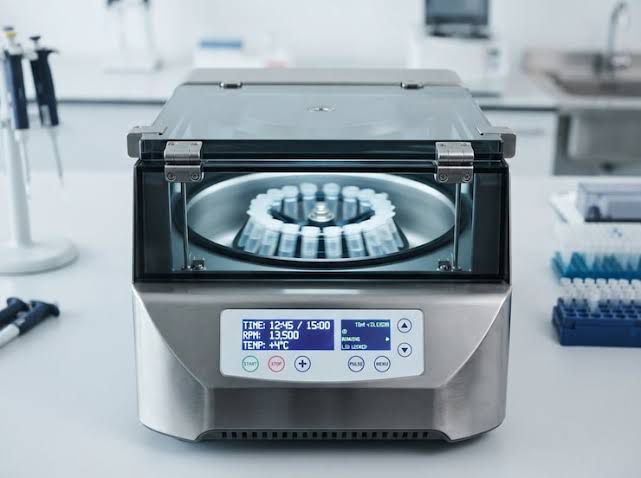
1. Mandatory Technical Metrics for Load Balancing
Even the slightest eccentricity at speeds of tens of thousands of RPM generates massive destructive force on the drive shaft and bearings. Therefore, technicians must strictly adhere to the following quantitative parameters:
≤ 0.1g Maximum allowable mass imbalance between opposing tubes | Gram (g) Mandatory unit when counterbalancing different solvent types | ≤ 2/3 Maximum sample fill limit per test tube |
• Maximum Mass Imbalance
For high-speed centrifuges, the weight differential between two symmetrical tubes must not exceed 0.1 grams. High-precision analytical balances must be used for calibration—never estimate by eye.
• Liquid Counterbalance Rule for Differing Densities
When two samples contain different solvents (for example, one tube contains water while the other contains a chemical of higher or lower density), operators must balance by mass (in grams), and strictly never by volume (in mL).
• Safe Sample Fill Limit
Fill sample tubes to a maximum of 2/3 capacity. Overfilling causes hydrodynamic pressure build-up at high speeds, resulting in instant tube cap dislodgement or tube rupture.
2. Strict Safety Rules for Rotors and Centrifuge Tubes
• The "Run-In" Rule (Monitored Startup)
Upon powering on the unit, operators must remain present to observe the equipment for 1 to 2 minutes until it reaches the set target speed smoothly. Field statistics reveal that approximately 90% of rotor explosion accidents occur during this initial acceleration phase.

• Speed Derating Limits Based on Solvents
When utilizing high-density solvents (such as CsCl) or highly corrosive chemicals, the maximum allowable rotor speed must be derated according to the manufacturer's specification chart. Never run at the maximum RPM listed on the outer casing.
• Absolute Sealing Integrity
Always secure individual rotor lids firmly before closing the main outer chamber lid of the centrifuge.

3. Emergency Protocol: Handling Tube Ruptures or Severe Vibration

⚠️ ACTIVATE PROTOCOL IMMEDIATELY UPON LOUD POPPING SOUNDS, METALLIC IMPACT NOISE, OR SEVERE VIBRATION
• Standard Samples: Wait at least 15 to 30 minutes.
• Biohazardous / Pathogenic Samples (Biohazard): Mandatory wait time of at least 30 minutes.
Scientific Rationale: High operational speeds generate hazardous aerosol particles containing pathogens or volatile chemicals suspended within the chamber. Opening the lid prematurely releases these toxic clouds directly onto the operator's face and respiratory tract.
Related article: Refrigerated Centrifuge Solutions in Healthcare & Aesthetics: The Gold Standard for Preserving Biological Samples
4. Equipment Lifecycle Management via Rotor Logbooks
Every high-speed centrifuge rotor has a strictly calculated service lifespan based on total run cycles or cumulative operating hours.
Operator Responsibility: Record complete entries in the logbook after every shift with mandatory data fields: Date of Operation — Speed (RPM) — Run Duration.
Metal Fatigue Warning: Once a rotor reaches the maximum rated cycle limit recommended by the manufacturer, it must be permanently decommissioned and scrapped. Internal metallic structures suffer from progressive metal fatigue, presenting catastrophic failure and explosion risks under extreme centrifugal forces if kept in service.