
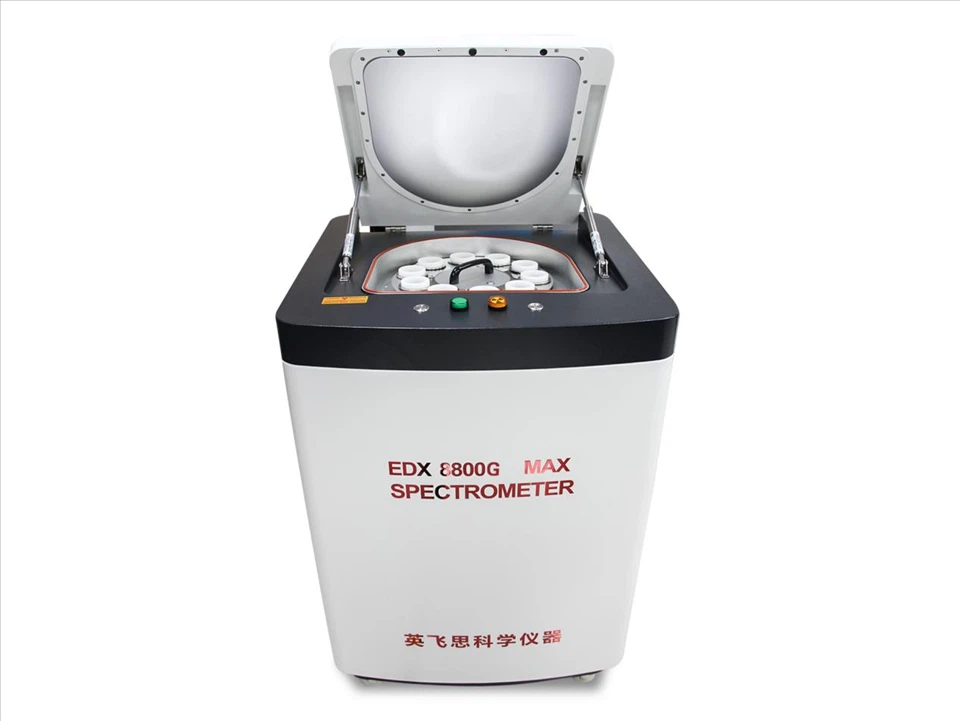
ESi EDX-8800G X-ray Fluorescence Spectrometer
Size: 650mm*600mm*900mm
Weight: 105Kg
Element analysis range:9F-95Am F-Am
Analyzable content range:0.2ppm- 99.99%
Detector:Original imported ultra-high resolution silicon drift detector
Multi - channel analyzer: Digital 4096 - channel analyzer, peak drift less than 0.5 channels (within 24 hours)
X - ray tube: Original imported high - power tube (high - power composite target tube is optional)
Sample types: Solids, liquids, powders, air filters
Automatic sampler: Standard with 10 positions, 12 - position and 14 - position options available
Collimator system: 8 groups with automatic adjustment
Filter system: 7 groups with automatic adjustment
Sample chamber: Air, vacuum, helium - filled (optional)
Size of the vacuum sample chamber: 360mm * 360mm * 60mm
Voltage: 220ACV 50/60HZ
Ambient temperature: - 10 °C to 35 °C
Optional configurations:
1 Sample spinning system
2 Helium gas filling system (One - click switching among vacuum, helium, and air states)
Application
Alloy Composition Analysis:
Rapidly determine the elemental content in materials such as stainless steel and aluminum alloys.
Quality Control: Ensure that metal materials comply with industry standards (such as ASTM, ISO).
Scrap Metal Sorting: Identify the components in scrap metals to optimize the recycling process.
Mining and Geological Exploration:
Ore Grade Evaluation: Analyze the content of target elements in minerals.
Mineral Identification: Determine the composition of rock and mineral samples to assist in geological research.
Environmental Monitoring and Governance:
Soil/Sediment Analysis: Detect heavy metal pollution (such as lead, arsenic, cadmium).
Water Quality Testing: Screen for harmful elements in industrial wastewater.
Air Particle Analysis: Monitor the metal components in atmospheric dust.
Building Materials, Ceramics and Glass:
Cement Quality Control: Analyze elements such as calcium, silicon, and iron in raw materials.
Glass Manufacturing: Ensure that the proportion of oxides in the formulation meets the requirements.
Coatings and Paints: Detect lead or other restricted components.
Electrical Appliances and Consumer Goods:
RoHS/WEEE Compliance: Detect hazardous substances such as lead, cadmium, and mercury in electronic products.
Toy Safety: Ensure that plastic or coating materials comply with international safety standards.
Petrochemical and Energy Industry:
Fuel Sulfur Content Detection: Comply with environmental protection regulations (such as sulfur limits in diesel).
Lubricating Oil Analysis: Monitor wear metals (iron, copper) to predict equipment failures.
Catalyst Research: Evaluate the distribution and content of active components (such as platinum, palladium)
Archaeology and Cultural Relic Protection:
Analysis of Cultural Relic Materials: Identify the composition and origin of ancient ceramics and metal artifacts.
Restoration Assistance: Match the chemical composition of restoration materials with that of the original artifacts.
Pharmaceutical and Food Industries:
Drug Impurity Detection: Screen for heavy metal pollution in active pharmaceutical ingredients (such as in accordance with USP <232> standard).
Food Safety: Detect toxic elements in food (such as arsenic in rice and mercury in fish).
Scientific Research and Education:
Materials Science Research: Analyze the correlation between the elemental composition and properties of new materials.
Teaching Experiments: Used for practical teaching in disciplines such as chemistry and geology.
Jewelry and Precious Metals: Purity Identification:
Rapidly determine the fineness of precious metals such as gold, silver, and platinum (such as the content of karat gold).
Gemstone Treatment Detection: Identify traces of filling or dyeing treatments.
Nuclear Industry and Special Materials:
Nuclear Fuel Analysis: Detect the purity and composition of nuclear materials such as uranium and plutonium.
Radiation Shielding Materials: Analyze the distribution effect of elements such as lead.
ຮັບສ່ວນຫຼຸດພິເສດຕາມປະລິມານ, ອັບເດດລາຄາຂາຍສົ່ງ ແລະ ການແຈ້ງເຕືອນສິນຄ້າໃໝ່ສົ່ງກົງເຖິງອິນບັອກຂອງທ່ານ.
ໂດຍການສະໝັກສະມາຊິກ, ທ່ານຍອມຮັບ ເງື່ອນໄຂການໃຫ້ບໍລິການ ແລະ ນະໂຍບາຍຄວາມເປັນສ່ວນຕົວ ຂອງພວກເຮົາ.
ເຂົ້າເຖິງຜູ້ຊ່ຽວຊານທີ່ໄດ້ຮັບການຢັ້ງຢືນຂອງພວກເຮົາໂດຍກົງ