What is round tube jaw cutting?
Round pipe clamp cutting is a technique that uses an iron cutter or hand grinder to create a beveled cut on a round pipe, so that this cut fits tightly and closely to the body of another round pipe at a 90 degree angle.
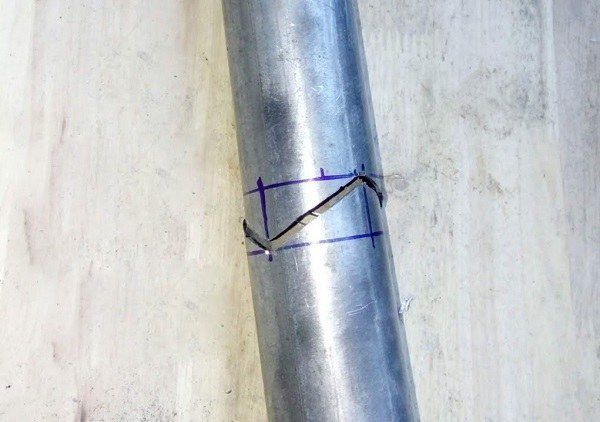
The preparation steps are the same:
To do this, you need to immediately buy a hand-held angle grinder, an iron or stainless steel pipe that needs to be processed, another metal pipe of equivalent size (slightly larger than the pipe that needs to be processed), a Regular sheet of paper, marker, ruler and a soft, flexible ruler.
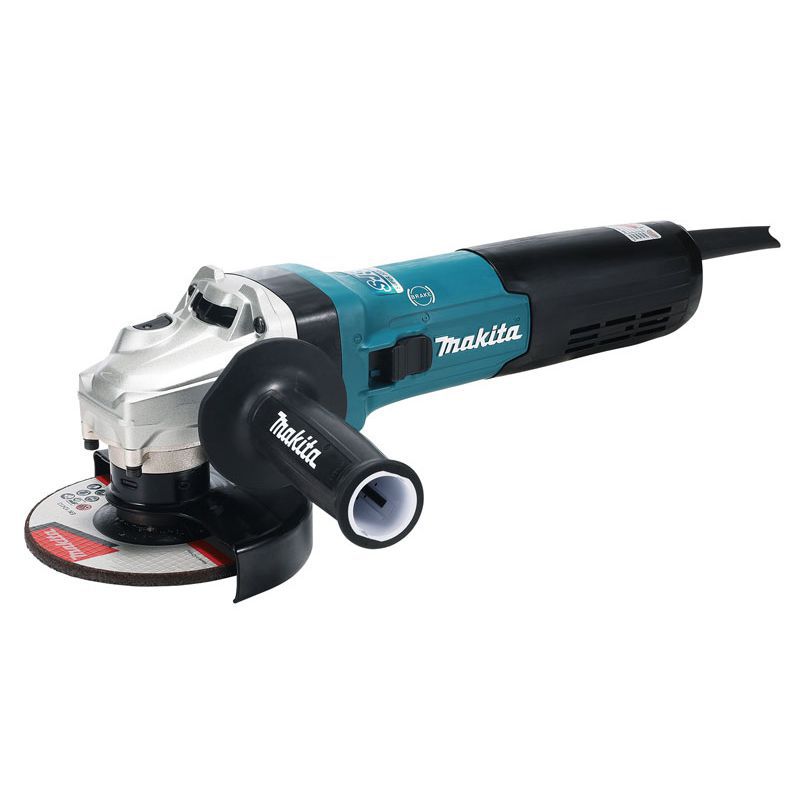
Steps:
Step 1:
- First of all, you need to determine the vertical size of the thin metal bar based on the formula: take the size of the iron/stainless steel pipe to be processed and divide by 3. For example, if the round pipe has a diameter of 5 cm, then the width of the thin metal rod will be 1.6 cm (5:3 ≈ 1.6).
- Then, use a sheet of paper to wrap around the prepared thin metal bar and cut off the excess paper so that the paper fits tightly to the size of the metal tube.
Step 2:
- Fold the cut paper in half, then fold it in half again to form 4 even folds. Use a marker to draw a small line at each fold.
- Then, based on the lines marked on the paper, you mark again on the thin metal tube. To ensure accuracy, you should use a ruler to measure and draw 4 parallel lines according to the marks on the metal pipe.
Step 3:
- Place the thin metal pipe inside the iron or stainless steel pipe that you plan to use the angle grinder to cut, and adjust the size to suit your work requirements.
- Use a pen to draw two circles on the iron/stainless steel pipe, along the edges of the two ends of the thin metal pipe and mark the same lines as on the metal pipe made before.
- After completing the marking, remove the thin metal tube from the iron/stainless steel tube.
Step 4:- Use a flexible ruler or tape measure to draw a curve connecting the marked points on the iron/stainless steel pipe, so that this curve runs from one connection point to another (in two opposite positions). match).
Step 5:
- Finally, use a grinder to cut along the drawn curve. Thanks to this method, you will be able to cut two round pipes at the same time quickly and achieve the desired standard size.
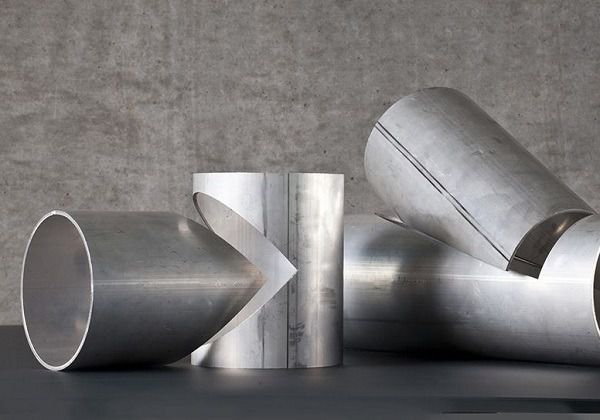
If your work often requires cutting pipe clamps, investing in a specialized pipe cutting machine is a reasonable choice to improve work efficiency and save time. The pipe clamp cutting machine is designed with fully automatic cutting processes thanks to the clamp cutting die (also known as punching die), helping to ensure accuracy and uniformity for each product.
However, if you only need to cut the tube mount a few times and do not require too much precision, using an angle grinder is still a viable solution. Although the initial results may not be perfect, with persistence and practice, your iron cutting skills will improve.
Above are my shares on how to cut pipe clamps with an angle grinder. To refer to the product, please visit the website emin.vn