Can a DC Clamp Meter Maintain an Entire Industrial Plant?
27/11/y 13:44:11
Did you know that the DC clamp meter is not just a specialized measuring device, but is rapidly becoming an indispensable tool for maintenance in modern industrial plants? With technological advancements, DC clamp meters are constantly being improved, integrating smarter, more accurate features, and offering exceptional convenience for use across various types of equipment.
Are AC/DC and AC Clamp Meters More Expensive and Worth It?
Beyond simply measuring current, DC clamp meters generally come with a higher price tag than AC-only models due to several unique technical reasons. Firstly, DC clamp meters rely on the Hall effect sensor to detect current, which requires a more complex sensing assembly for accurate readings.
Furthermore, clamp meters equipped with the True RMS function (measuring the true effective value of the current, even if the waveform is complex or distorted) have an even higher cost because they integrate advanced measurement technology, ensuring absolute accuracy in all situations.
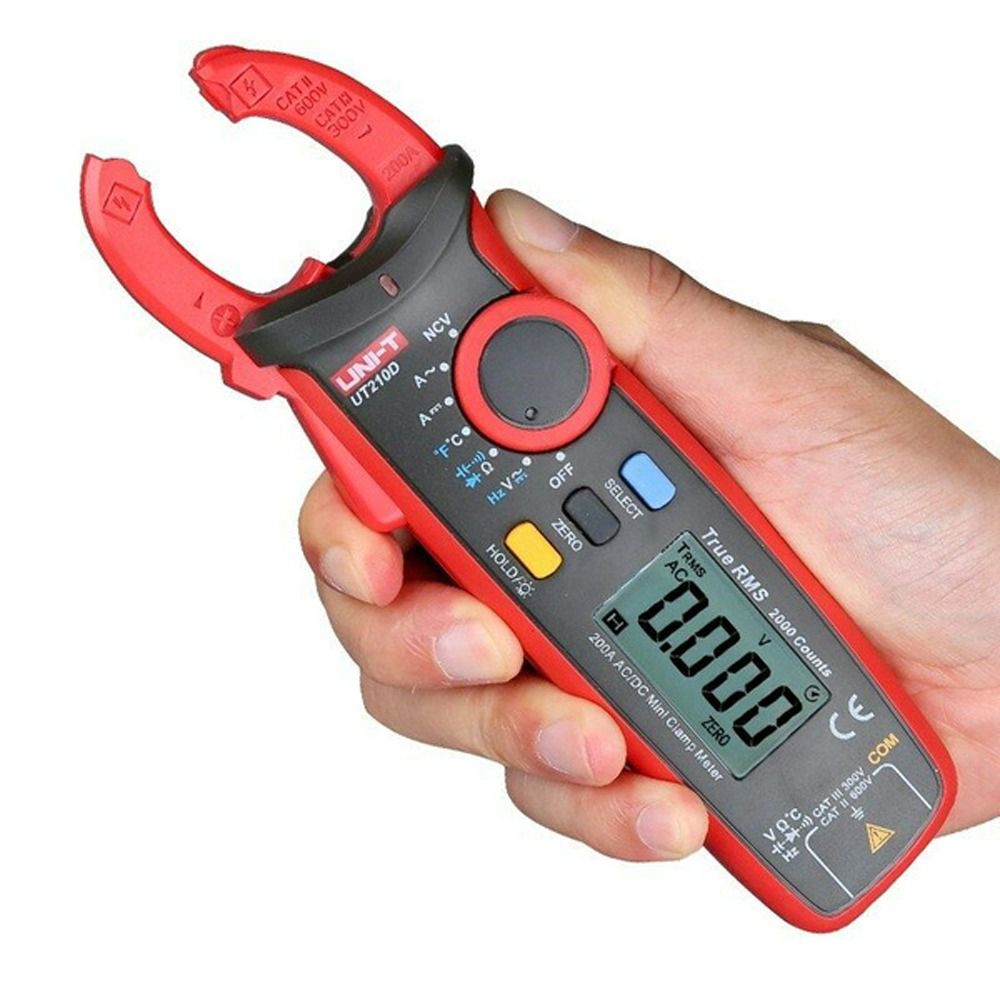
The UNI-T UT210D Clamp Meter, featuring True RMS and the ability to measure both AC and DC current, displays highly accurate results, making it suitable for industrial environments that demand high operational efficiency. This explains why DC clamp meters are generally priced higher than conventional AC current measurement devices.
Popular Clamp Meters Today
Can a DC Clamp Meter Maintain an Entire Plant? What Types of Machines Require It?
The answer is yes, but only if you clearly understand the device's scope and features. However, it is only one part of the overall measurement and inspection toolkit. That said, DC motors are common components in:
⦁ Hydraulic pumps and industrial fans, used to control flow and pressure.
⦁ Industrial robots and automation equipment operating production lines.
⦁ Forklift systems and internal electric vehicles in warehouses.
⦁ Press machines and CNC cutting machines that require high torque and flexible speed control.
⦁ Solar power systems with batteries and accumulators storing DC power.
While it cannot check every type of machine current, DC current is present across all critical equipment categories in the plant. Using the DC clamp meter in parallel with devices for measuring voltage, resistance, power quality analysis, and other modern sensors will provide a more comprehensive view of the machinery and electrical system status.
Applications in the Plant
How to Optimize Inspection Time with a DC Clamp Meter?
First, checking the motor's inrush current (starting current) is a key indicator of the machine's health. If the starting current is too high compared to the manufacturer's specifications, the motor may be overloaded or at risk of failure.
Next, measuring the periodic operating current is also essential for assessing machine performance. Current that is too low or too high signals an abnormality, such as worn bearings or damaged windings. Plants commonly keep clamp meters like the UNI-T UT210D readily available for various measurement scenarios.
Snap button testing evaluates whether buttons, push-buttons, and other attached garment accessories remain securely fixed when subjected to a controlled pull force.
Hydrostatic head testing evaluates a fabric’s resistance to water penetration under controlled pressure. This guide explains the method, test observations, and practical interpretation of results.
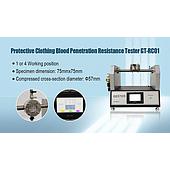
A protective clothing blood penetration resistance tester supports the evaluation of material resistance to synthetic blood under controlled test conditions.
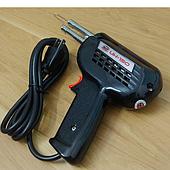
A 100W soldering iron can deliver more heating power than a 40W model, but that does not necessarily mean it will solder faster in every situation. Soldering speed depends on the amount of heat that needs to be transferred to the workpiece and the tip's ability to maintain its temperature when it comes into contact with a thermal load.